

Classics

All pupils at Pinewood have the chance to learn Latin and study the history, culture and ideas of the classical ancient world to which so much of our modern heritage is owed.


From Year 5 onwards, when the subject is first timetabled, lessons are divided (in varying proportions throughout the school) between formal study of the grammar and syntax of the Latin language, and one lesson each week is devoted exclusively to fostering a critical interest in varied aspects of Greek and Roman achievements and way of life. (Year 5: 1 Classics lesson to 1 Latin lesson; Year 6: 1 to 2; Years 7 and 8: 1 to 3).


Classical Culture

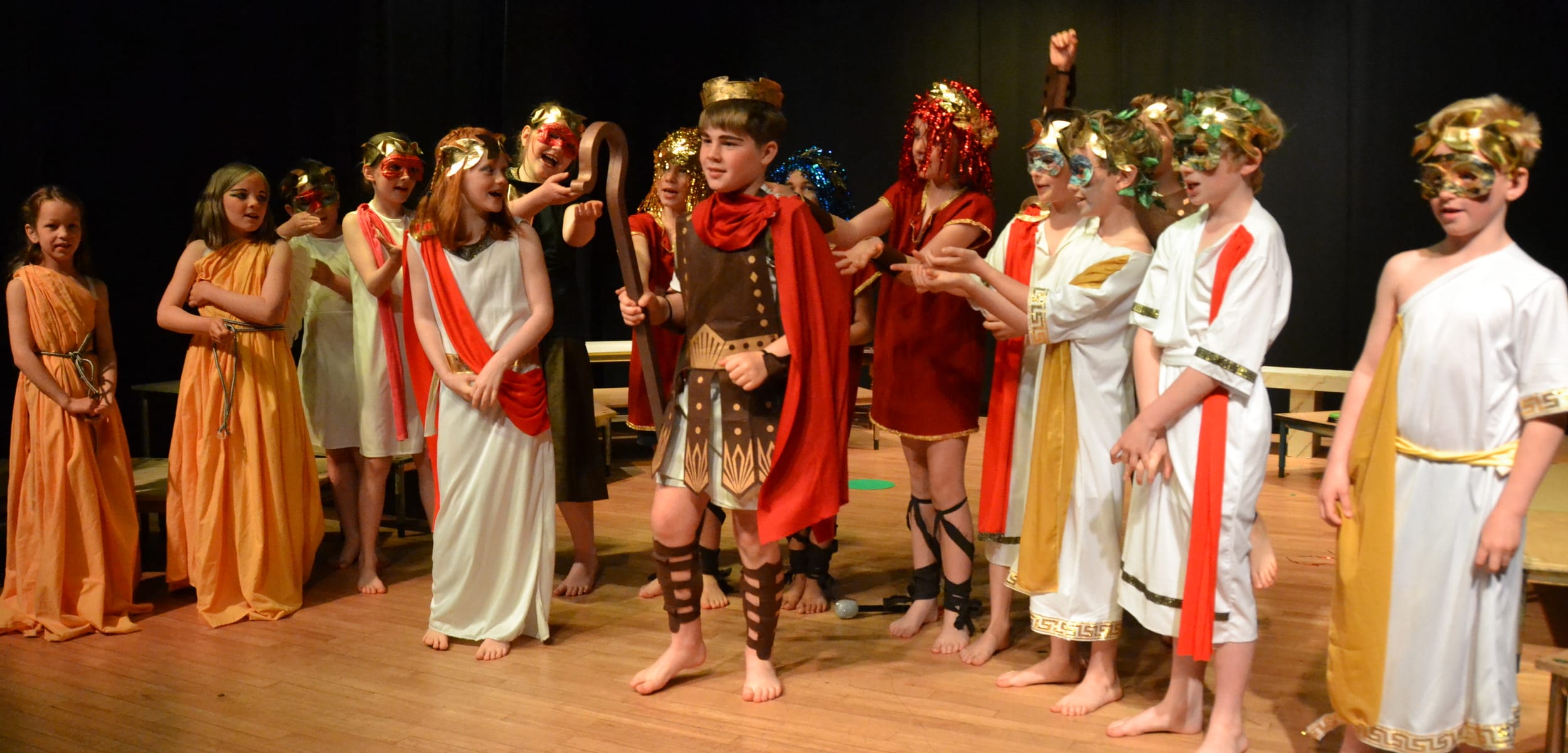
Classical topics include Greek and Roman Religion and Entertainment, The Olympic Games, Gladiatorial Combat, The Persian War, The Origins of Rome and Her Empire, The Roman Army, Roman Britain, Pompeii, Food and Dress of the Ancients, and Slavery. In Year 8 Common Entrance candidates gain an extensive knowledge of Greek Mythology including The Trojan War and The Odyssey. All pupils are encouraged to examine parallels and differences between ancient and modern mores, learn to research independently and in small groups the aspects of topics which most interest them, and are able to enjoy several feature-length films depicting some of the immortal tales bestowed to us. Cross-curricular links with History, RS and PHSE+C are accented throughout, although others regularly appear. In addition the department has traditionally taken pupils on a variety of trips to nearby sites of classical interest, including Fishbourne Palace, Chedworth Villa, the Roman fort of Caerleon and the City of Bath. A visit from the re-enactment troupe Legion XIV is currently being planned for Years 3 and 5, as is a joint trip with the Art department to The Ashmolean Museum, Oxford for Year 7.


Latin

The increasing emphasis placed on mastering elementary and intermediate Latin throughout the top half of the school, as reflected in the allocation of lessons, correlates with the many specific benefits which the subject affords pupils as their learning progresses in other areas. For children of all abilities, Latin provides concrete support to developing linguistic skills, especially as nurtured by and required for English and French, links to which are constantly highlighted. From re-enforcing the ability to identify and describe parts of speech and confirming spelling and retention of Latinate vocabulary, to aiding development of complex sentence structure and general accuracy in the written word, the impact of making even steady-but-sure progress in this challenging discipline is very wide.


Progress in the Latin language at Pinewood is founded on making grammatical teaching as engaging and enjoyable as possible, although also in the belief that, vice versa, enjoyment will come equally from the satisfaction of making sound progress. With heavy emphasis on differentiation between and within the three sets in each year, pupils are pushed directly according to their ability, not least in the attempt at all costs to avoid the 'turn-off' of becoming lost among new or difficult linguistic concepts. A programme of additional tutorial sessions outside of class time supports both less-able and gifted pupils to these ends.


Learning Skills

The Classics department at Pinewood enjoys increasingly strong links with Learning Support. Because some pupils tend to struggle with the differing skills required for proficiency in reading and writing, and by extension the pursuit of other languages, the two fields can be of great mutual support. Pupils who need to find extra time in Years 7 and 8 to solve persistent difficulties with key skills in English and Maths may forego their Latin studies if this is agreed to be in their best interests. Increasingly, however, pupils in this situation appear to benefit from maintaining their efforts at formal Latin grammar because of the skills it engenders, including the systematic breakdown and re-forming of words into/from component parts, the regular application of defined rules, practiced retrieval of relevant information, and improved sentence structure, spelling and accuracy. Pupils begin Latin with no past experience of difficulty or failure, enabling underperformers to attack a new subject with renewed enthusiasm, despite its literary and conceptual demands. Guided by Learning Support, Latin teachers are attuned to what can be expected of pupils, where the current focus lies for improvement in key skills, and how activities in Latin lessons can best help individual pupils to achieve this. Although it is expected that most will benefit from sitting a Level 1 Common Entrance paper at the end of Year 8, it is possible to reap the educational rewards without the additional pressure of an examination.


Syllabus 

The Pinewood Classics department aims to furnish all its pupils with a firm grounding in elementary Latin, enabling the majority to leave Year 8 with at least Level 2 Common Entrance which is required by most large senior schools as an indication that pupils will take the subject further, hopefully to GCSE level or beyond. It is at these latter stages when pupils will see all their efforts further rewarded by gaining access to some of the greatest western literature in its original language. Some sit Level 3 Common Entrance or take scholarship papers in Latin, gaining good marks in which proves a very useful contribution towards any possible award. Post-scholarship pupils have the chance in their last term of Year 8 to try their hand at any manageable language which interests them, be it Italian, Hebrew or, say, Arabic; continuing the development of their skills of Latin translation, they are also able to attempt short passages of authors such as Caesar and Pliny for the first time. 


The department broadly follows the outline of Ab Initio by Bob Bass, books 1-3, although this is regarded as a useful resource rather than a primary tool. Pupils benefit from a continuously-developing set of grammatical and classical resources, written with the specific requirements of Pinewood children in mind. This is also supplemented by Latin From Common Entrance to GCSE by Mike Siegel during scholarship work.


Greek 

We introduce the study of elementary Greek to the top set of Year 7, which is of particular benefit to our scholarship candidates. 


Back to top